
How Intellectual Property Connects Into Your Estate Plan
How Intellectual Property Connects Into Your Estate Plan

Example of IP Mgmt with Holding Company
IIntellectual property is often discussed as something creative or technical — a book, a brand, a course, a system, or an invention.
In reality, intellectual property is property, and like any other form of property, it raises an important question:
Where does this asset live if something happens to you?
Intellectual Property Is an Estate Asset
Intellectual property does not disappear when the creator is no longer present.
Without an estate plan in place:
Authority over the work can become unclear
Ownership may default unintentionally
Beneficiaries may lack legal control or decision-making power
Assets may be exposed to probate or foreign jurisdiction
This is not a failure of registration — it is a planning gap.
Registration Is Only the First Step
Registering intellectual property establishes:
Authorship
Ownership
Priority
But registration alone does not determine:
Who controls the property over time
Who may license or manage it
How it is preserved or stewarded
These questions are answered through estate planning, not registration.
For individuals registering intellectual property without an estate plan, registration may correctly record ownership — but leave future control unresolved.
Estate Planning Is About Continuity
An estate plan exists to ensure that assets:
Outlive the individual
Are managed intentionally
Are protected from confusion or dispute
Retain long-term value
Because intellectual property often grows in value over time, integrating it into an estate plan becomes increasingly important — especially for creators, educators, founders, and innovators.
An Indigenous Perspective on Stewardship
From an Indigenous perspective, estate planning emphasizes:
Continuity rather than disposal
Stewardship rather than abandonment
Responsibility beyond the individual
Intellectual property reflects knowledge, creativity, and contribution.
Planning for its continuity is an act of stewardship.
What If You Don’t Have an Estate Plan Yet?
Many individuals begin by registering intellectual property before establishing an estate plan.
That is not uncommon — but it is worth addressing.
Without an estate plan:
Intellectual property may remain personally held by default
Control may not transfer as intended
Future decisions may be left to outside systems
For those in this position, registration can be the starting point, while estate planning becomes the next necessary step.
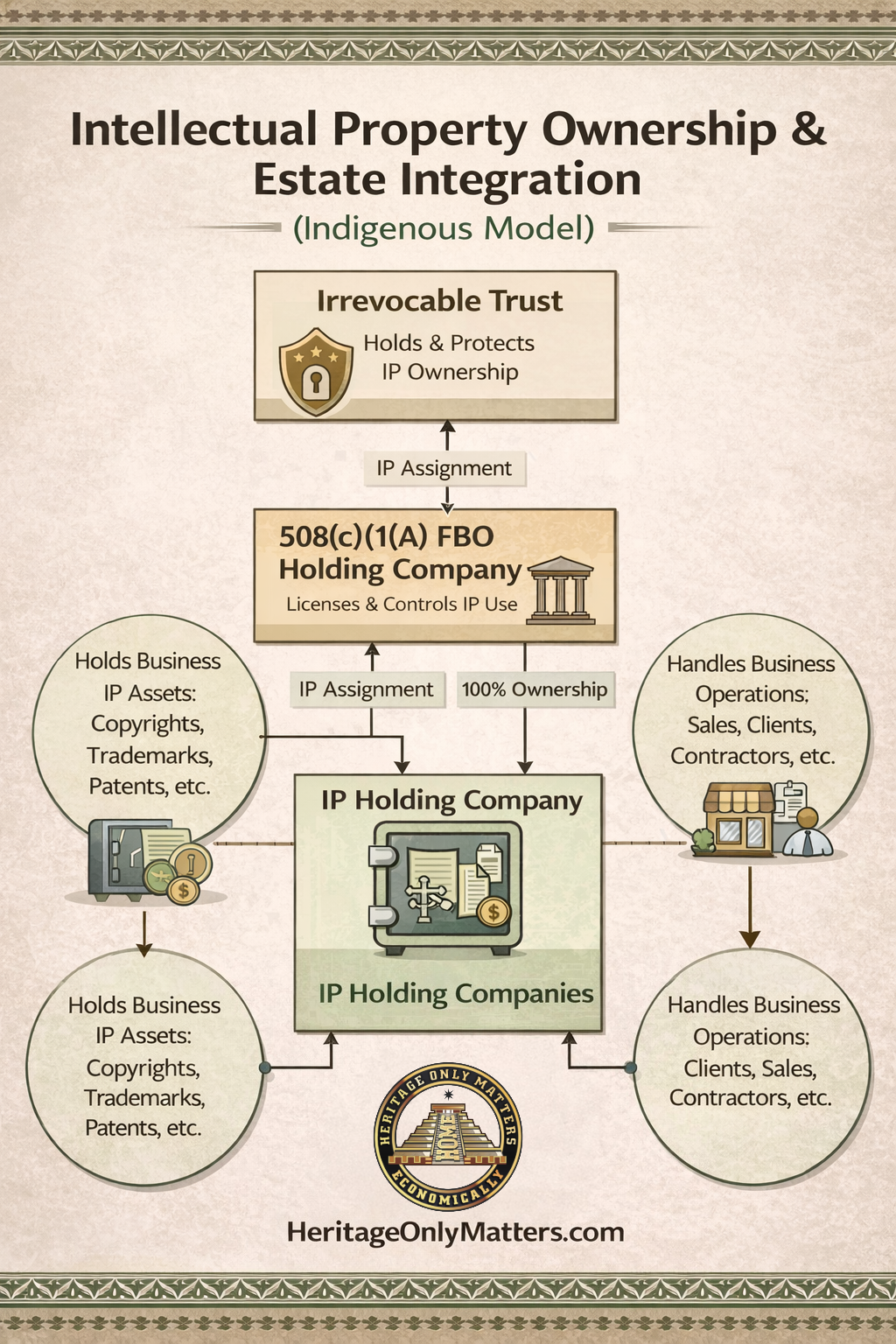
How Registration and Estate Planning Work Together
Registration records ownership
Estate planning determines placement
Together, they provide clarity and continuity
Skipping either step can leave important questions unanswered.

Final Thought
Creating intellectual property establishes value.
Planning for that property determines what happens to that value over time.
If you are considering intellectual property registration and do not yet have an estate plan, it may be worth learning how these two areas connect — before proceeding further.
Want Help Understanding How This Applies to You?
Intellectual property ownership and estate planning are highly individual.
If you want clarity on:
Whether your intellectual property is properly positioned
What gaps may exist without an estate plan
What steps may make sense before or alongside registration
You may schedule a discovery consultation to explore your situation and determine appropriate next steps.
👉 Book a Discovery Call
👉 Return to Intellectual Property Registration Overview
Before You Register Intellectual Property — Read This First
